

Article
Pre-Settlement Funding for Scooter, E-Bike, and Bike-Share Crashes
Call for free evaluation
Available 24/7


Submit a Confidential Application
Complete the form below to see if your case qualifies for pre-settlement funding. No obligation. Completely confidential.
Table of Content
On This Page
More Articles
Categories
When a quick ride turns into a case
You scan the code. The scooter chirps. You roll out.
Then something goes sideways—literally. A cracked seam in the bike lane. A car turning across your path like you’re not there. Brakes that felt fine… until they didn’t. Suddenly you’re on the curb doing that mental inventory: fingers, teeth, head, phone. Pride.
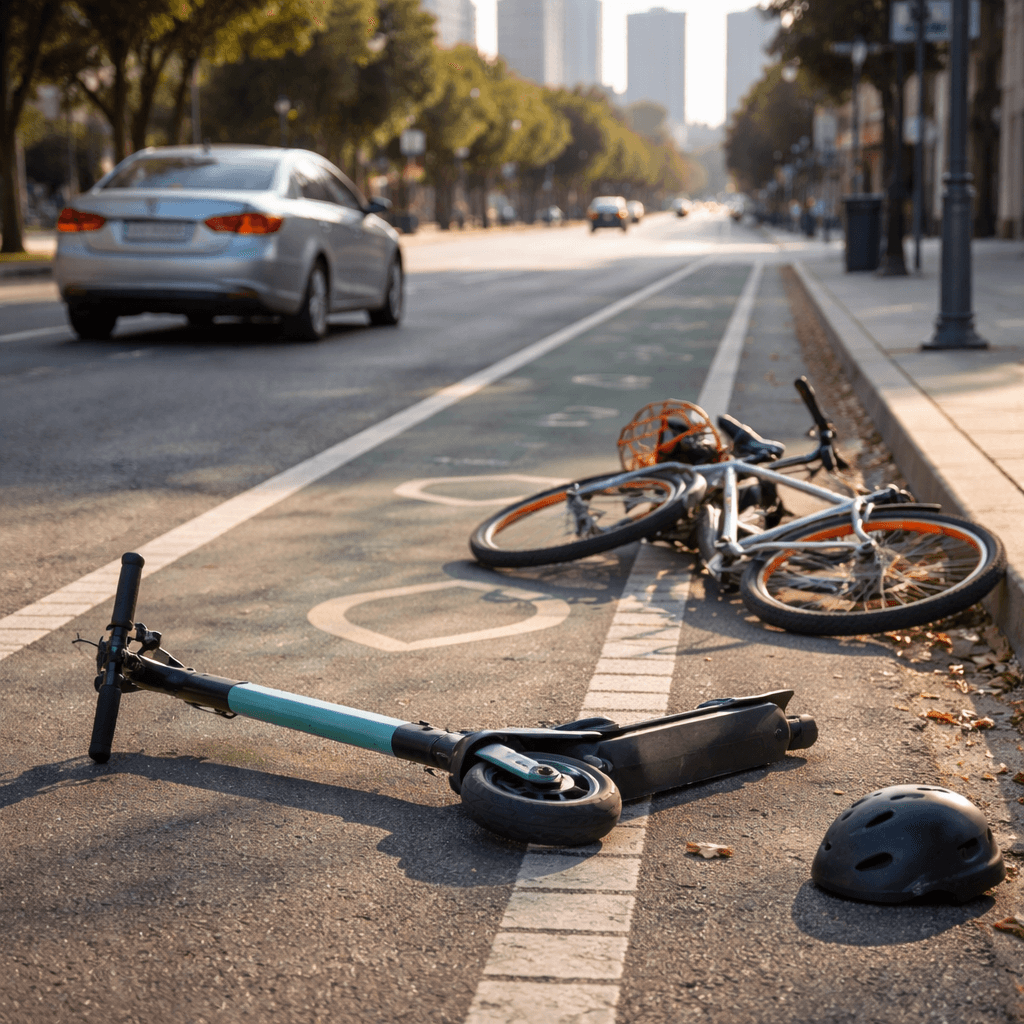
Micromobility crashes—shared scooters, e-bikes, bike-share programs—can be brutal. The rides are short. The injuries can be long. And the liability story is often fuzzy right when the bills start arriving.
Why these claims don’t behave like “normal” accidents
A car accident often starts with a clean question: who hit whom. A scooter or bike-share wreck starts with three questions at once: what happened, who owns the problem, and where the evidence went.
The device gets picked up and reissued. The app data lives with the platform. The street gets patched. So the case gets built from scraps: photos, ride screenshots, ER notes, maybe a bit of video if you’re lucky. Not hopeless. Just slow.
Liability can split three ways (and that changes everything)
Micromobility injuries have a habit of involving multiple “maybe-responsible” parties. That’s not drama. That’s the setup.
Public entities. If the crash traces back to road conditions—potholes, uneven pavement, a raised utility cover, missing signage—a city or agency might be involved. And public cases come with their own rulebook: notice deadlines, special procedures, immunity arguments. Is commonly thought that “bad road equals payout,” but legally it’s more like: did they know, did they have time, and does the law even let the claim move forward the way you’d expect.
Platforms and operators. The scooter or bike-share company controls maintenance cycles, onboarding warnings, geofenced slow zones, and sometimes where the app nudges you to ride. Their user agreement (accepted in three seconds) can show up later—not as a magic shield, but as a way to steer fault arguments and insurance access.
Manufacturers. A snapped stem, a sticky throttle, a battery issue, brakes that don’t bite when they should—those can raise product questions. Design defect? Manufacturing defect? Maintenance failure? The tricky part is evidence, because the device is rarely sitting in your garage. It’s usually back out in circulation.
Drivers are still a big piece. Doorings. Right-hook turns. A driver drifting into a bike lane. If the at-fault driver has tiny limits—or no insurance—the rider’s own coverage may matter more than anyone expects, and those thin-coverage situations can stretch the timeline while everyone argues about whose policy pays.
Helmets and road rules: tiny details that move big numbers
Helmet use affects injuries, obviously. It can also affect negotiations. In some places it’s required for certain riders or devices, and “no helmet” gets turned into a blame lever even when the real cause was a street defect or a driver who didn’t yield. Is that fair? The law likes tidy stories. Real life doesn’t.
Same with road rules. Sidewalk riding where it’s prohibited. Going against traffic. Rolling a stop sign. Even if those facts aren’t the true cause, they can feed comparative negligence, which can reduce the expected value of a claim. And when value drops, funding decisions often tighten.
How funding decisions get made in the real world
Lawsuit funding isn’t about how bad the crash felt. It’s about whether the claim looks like it has a clear path to resolution, with enough value left after medical bills, liens, and attorney fees. Unromantic math, but still… math.
Micromobility cases usually rise or fall on documentation. Liability proof (photos, witnesses, app trip data, maintenance history if it can be obtained). Medical proof (diagnosis, treatment, follow-ups, and whether symptoms track logically from the event).
One common hurdle: scattered medical care. A lot of riders don’t have a steady primary doctor, so the file becomes ER → urgent care → specialist → different clinic because appointments are scarce. Totally human. Also harder to evaluate if you’re bouncing between urgent care and ERs, because the records don’t always line up neatly.
Coverage can be just as messy. Sometimes there’s platform insurance, but it can be limited or slow to confirm. Sometimes the rider’s own Med‑Pay is the only immediate, clear benefit available, and that changes the cash-flow picture (and the risk picture). When Med‑Pay is the only thing paying right now, reviewers tend to be more conservative until liability and the ultimate paying source are clearer.
Then there’s the language barrier. Tourist areas, cross-border treatment, specialists who document in Spanish, imaging reports that get summarized instead of fully translated. None of that makes the injury less real. It just adds friction, and when records aren’t in English there’s often extra back-and-forth to confirm diagnosis, prognosis, and treatment.
Sometimes the treatment plan itself is a curveball. Newer procedures. Off-label therapy. A specialist suggesting something “not standard” because a wrist or knee just isn’t healing right. That can be legitimate care, but it may draw pushback in settlement talks. And if the care plan is a little “new-school”, the file usually needs stronger medical support and a clearer prognosis.
Once liability is cleaner and treatment is more stable, decisions get easier. Some people look at pre settlement funding earlier because rent doesn’t wait and neither do prescriptions, but the strongest approvals tend to come when the case reads like a timeline—not a mystery novel.
A few boring moves that actually help
Take photos. Report the incident in the app. Save ride screenshots. Get witness names if you can. Get medical care and keep the follow-ups.
That’s it. Boring. Effective.
Micromobility is only getting bigger, and the legal system is still catching up. Cities roll out new rides fast and repaint the lanes slow. Until streets, rules, and behavior get more predictable, these crashes will keep happening. If it’s your claim, keep the facts tight, the treatment consistent, and the paperwork organized. Not glamorous, but it works.
Never settle for less. See how we can get you the funds you need today.
Call for free evaluation Available 24/7